

Lifid
The Confit, in All Its Splendor

 By Fat Transformed: The Confit, in All Its Splendor
AMERICAN chefs like David Kinch of Manresa in Los Gatos, Calif., insist on the freshest seasonal ingredients. And then what do they do with them? They often apply techniques that were originally used for preserving, in times and places where supplies of fresh produce, meat and fish were not guaranteed all year.
Like smoking and drying, making confit was a way of preparing meat for long-term storage. Confit amounts to cooking an ingredient in fat, then sealing it in the fat so it can be kept for months without spoiling. In southwest France, duck, goose and sometimes pork were made into confit. The cooking in fat amounts to poaching, long and slow.
For Mr. Kinch, confit fits in with his approach to food, which emphasizes simplicity and purity of flavor.
„The seasonings are so basic when you make confit,“ he said. „Just salt, pepper and some herbs. You do not change the flavor of the ingredient, but you wind up with texture that is often silky and rich, even after you’ve scraped off the cooking fat.“
Mr. Kinch often serves an ingredient prepared two ways, a confit paired with the same thing made by a different cooking method, for example, like roasting or grilling.
He also tailors the cooking fat to the ingredient. When he can get fresh porcini mushrooms, he will make a confit of them in olive oil. For duck, he uses duck fat. In confit of chicken wings, done in chicken or duck fat, the meat stays beautifully moist, and he crisps the wings by deep-frying them just before serving them on turnip purée. He poaches pieces of suckling pig in lard, and for chicken livers he uses chicken fat, clarified butter or even clarified brown butter.
 The confit technique transforms the chicken livers completely.
„I once had chicken livers confit in a small bistro in the north of Italy and couldn’t forget them,“ he said. „They were smooth, like ganache, or good foie gras. You can spread them on toast.“
To achieve this consistency, his technique is unusual. After carefully trimming the livers, Mr. Kinch lets them soak in milk overnight, a French technique that makes them less bitter. To cook them, he places them in clarified butter in a saucepan, enough to cover the livers completely. A sprig of thyme or a bay leaf can add a subtle dimension.
He heats the livers in the butter briefly, then transfers them to a container to cool to room temperature. „It takes a long time,“ he said.
After the livers have cooled in the fat, he refrigerates them. Sometimes he transfers the livers and their fat to small canning jars in which they can be served. After he refrigerates them, he will not touch them for at least 24 hours, a kind of curing process.
„I dig them out of their fat and serve them with toast and a salad dressed in red wine vinegar and olive oil alongside,“ he said. „And I like to sprinkle some coarse-grained sea salt on top, just like foie gras.“




Vélmenni sjá um matarbakka í nýju hátæknieldhúsi Icelandair

Hermann Svali krýndur Kjötmeistari Íslands 2026 – „Ég ætlaði mér alltaf að verða kokkur“

Námskeið: Hvernig tryggjum við góða þjónustu í jólaösinni?

Laugarás Lagoon fagnar eins árs afmæli með þriggja daga hátíð

Leó og Pétur keppa fyrir Íslands hönd í Macau

Framúrskarandi fagfólk dæmir bestu eftirrétti og konfektmola ársins

FoodCycler FC-75 – Snjöll úrgangslausn fyrir fyrirtæki og vinnustaði

Íslenskur mascarpone fær súkkulaðibragð
Laugarás Lagoon fagnar eins árs afmæli með þriggja daga hátíð
Námskeið: Hvernig tryggjum við góða þjónustu í jólaösinni?

Gestir stjórna gröfum á meðan þeir borða og drekka

Myndband: Stærsta hlaðborð Bandaríkjanna er í litlum sveitabæ í Pennsylvaníu

Litlu hlutirnir skipta mestu máli hjá Agga Sverris

Endurbyggðu veitingastaðinn frá grunni eftir brunann

Trump í vínstríði við dyggan stuðningsmann
-
 Viðtöl, örfréttir & frumraun2 dagar síðan
Vélmenni sjá um matarbakka í nýju hátæknieldhúsi Icelandair
-
 Viðtöl, örfréttir & frumraun3 dagar síðan
Hermann Svali krýndur Kjötmeistari Íslands 2026 – „Ég ætlaði mér alltaf að verða kokkur“
-
 Markaðurinn2 dagar síðan
Námskeið: Hvernig tryggjum við góða þjónustu í jólaösinni?
-
 Viðtöl, örfréttir & frumraun2 dagar síðan
Laugarás Lagoon fagnar eins árs afmæli með þriggja daga hátíð
-
 Keppni2 dagar síðan
Leó og Pétur keppa fyrir Íslands hönd í Macau
-
 Markaðurinn1 dagur síðan
Íslenskur mascarpone fær súkkulaðibragð
-
 Markaðurinn3 dagar síðan
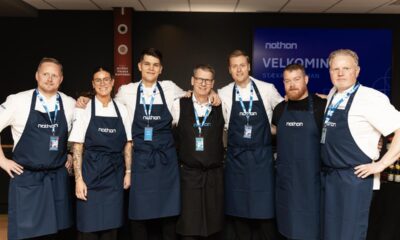
Nathan fagnaði tímamótum með stærsta viðburði í sögu félagsins
-
 Markaðurinn1 dagur síðan
FoodCycler FC-75 – Snjöll úrgangslausn fyrir fyrirtæki og vinnustaði